
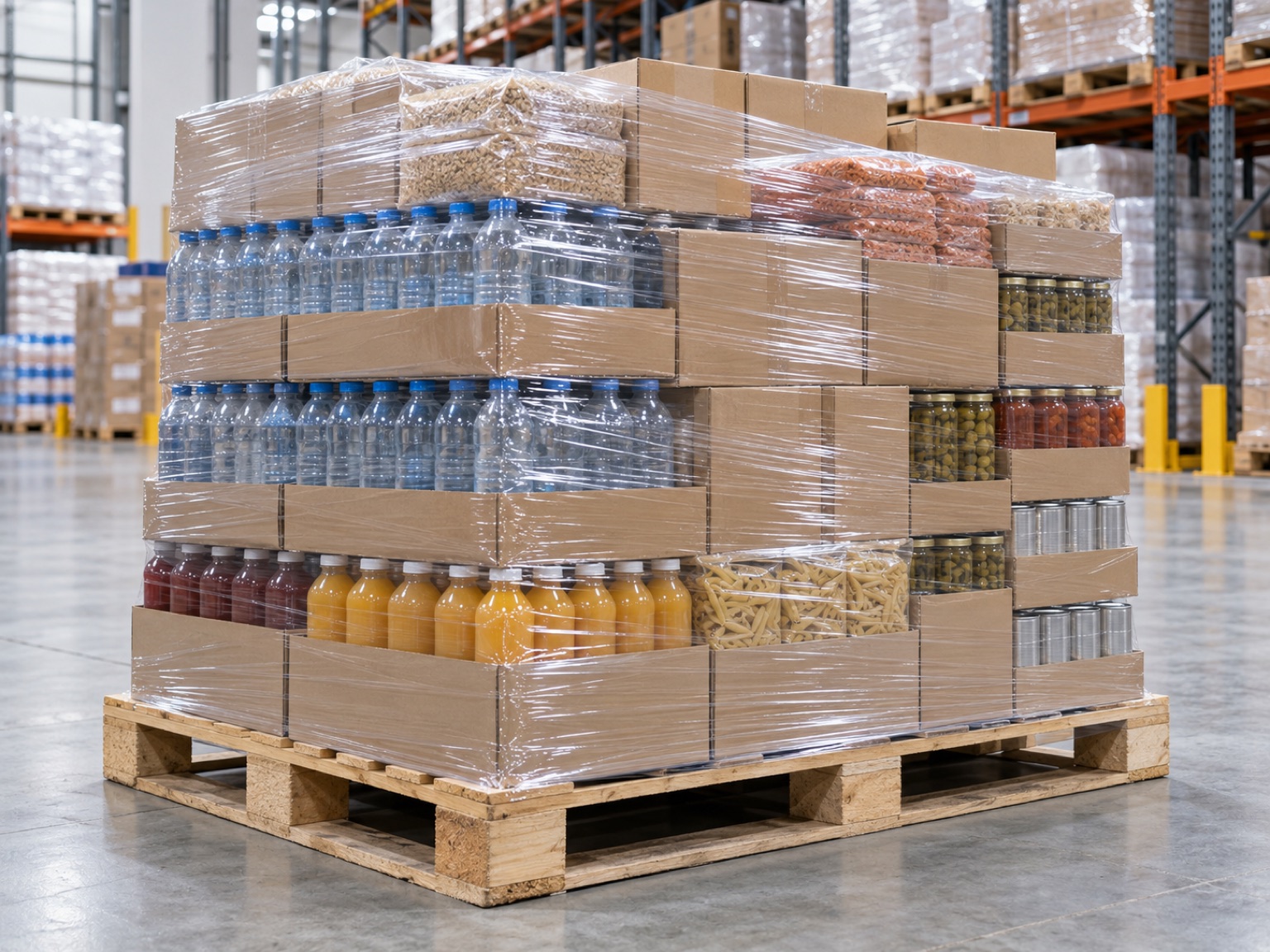
Beverage cases carry weight and leakage risks, while dry-food cases may be vulnerable to punctured bags or moisture. The outer pack should protect primary packs and carry the stacking load.
Identify the product-specific risk
For bottles or jars, choose dividers and orientation for the actual format. Keep dry-food bags away from sharp edges. Apply carton tape to clean, dry flaps; assess any direct food-contact requirements separately.
Match inner protection, closure and pallet pattern
Place heavier cases at the bottom and build a pallet pattern that resists shifting. Stretch film must not hide labels or required airflow openings, and should never be used to conceal a leak.
What to check in a shipment trial
After a route trial, check crushed cases, leakage, cap damage, lot labels and pallet lean. Where cold-chain controls apply, monitor temperature under the separate temperature procedure.
- Record product and carton dimensions, weight and lot details.
- Check carton closure, pallet arrangement and label access on a sample load.
- Compare damage and material use after shipment using the same criteria.
This is general packaging guidance. Confirm product-specific limits in current supplier documentation.
Review the pack for Food and Beverage Cartons: Pallet Stability
For “Food and Beverage Cartons: Pallet Stability,” share the product and carton dimensions, application method and transport route so the packaging steps can be reviewed against the actual workflow.
Frequently asked questions
How much stretch film should be used?
Use a validated application that stabilises the load without crushing cases or hiding required labels.
Which checks matter most before approving the pack?
For food and beverage cartons: pallet stability, record the chosen materials, pack dimensions, route and handling conditions. Inspect the package at dispatch and receipt, then compare the results with the agreed acceptance criteria.