
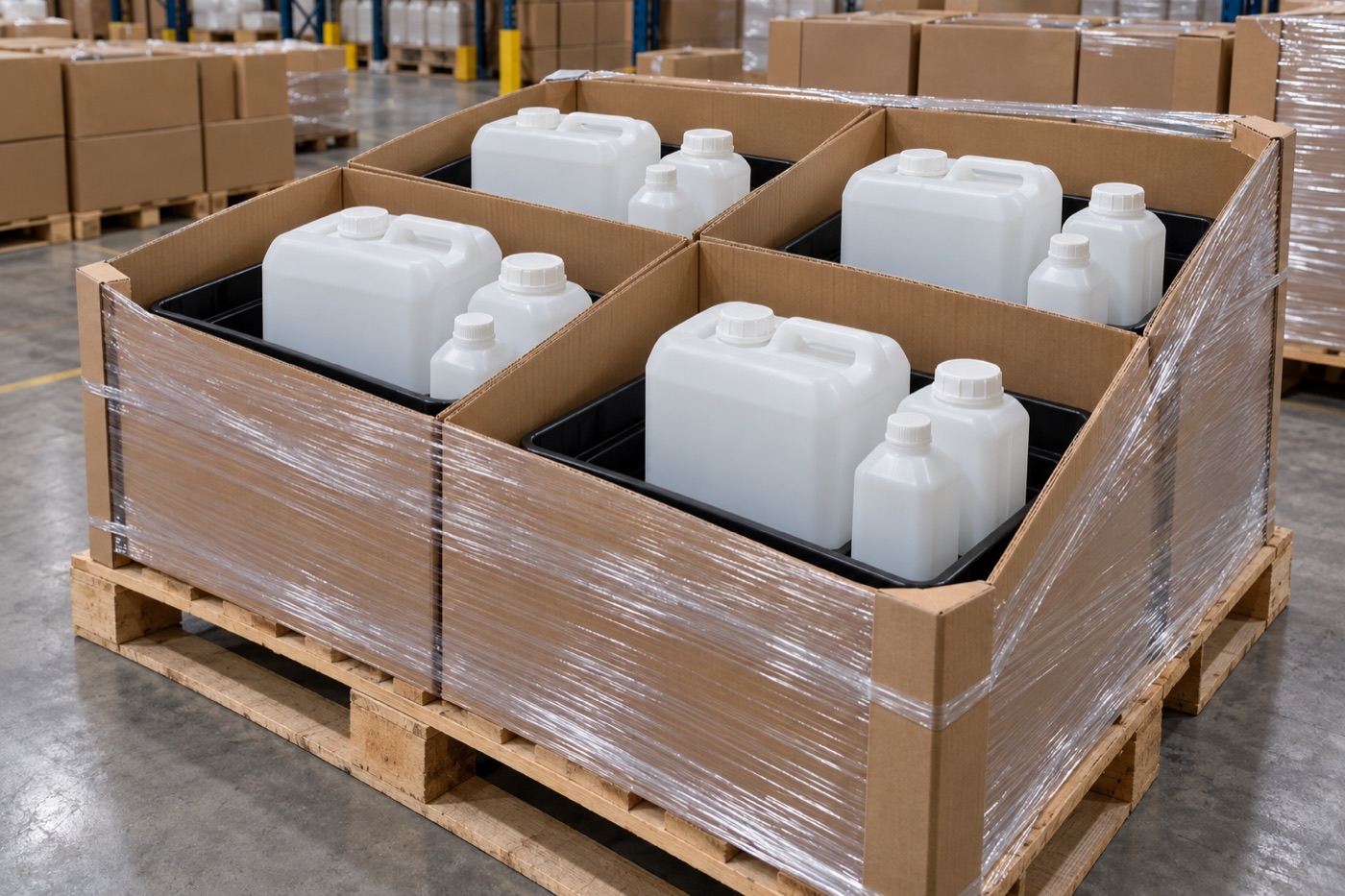
For liquid cleaners, container closure and material compatibility must be addressed before pallet wrapping. Mixed chemical loads and potential spills should follow the site safety procedure.
Identify the product-specific risk
Transport containers in the orientation specified by the supplier; inspect caps, necks and tamper features. Use dividers where bottles could strike each other. Do not assume the outer carton alone will contain a leak.
Match inner protection, closure and pallet pattern
Build balanced pallet layers and follow loading procedures for potential leakage. Stretch film should contain the load without obscuring labels; use site-approved covers or secondary containment when required.
What to check in a shipment trial
Inspect caps, carton bases, pallet surfaces and labels before dispatch and at receipt. Isolate any leaking load and follow the safety data sheet and site procedure.
- Record product and carton dimensions, weight and lot details.
- Check carton closure, pallet arrangement and label access on a sample load.
- Compare damage and material use after shipment using the same criteria.
This is general packaging guidance. Confirm product-specific limits in current supplier documentation.
Review the pack for Chemical and Detergent Pallet Safety
For “Chemical and Detergent Pallet Safety,” share the product and carton dimensions, application method and transport route so the packaging steps can be reviewed against the actual workflow.
Frequently asked questions
Can stretch wrap contain a chemical leak?
No. Follow the product's spill and secondary-containment procedure; pallet film is not leak containment.
Which checks matter most before approving the pack?
For chemical and detergent pallet safety, record the chosen materials, pack dimensions, route and handling conditions. Inspect the package at dispatch and receipt, then compare the results with the agreed acceptance criteria.