
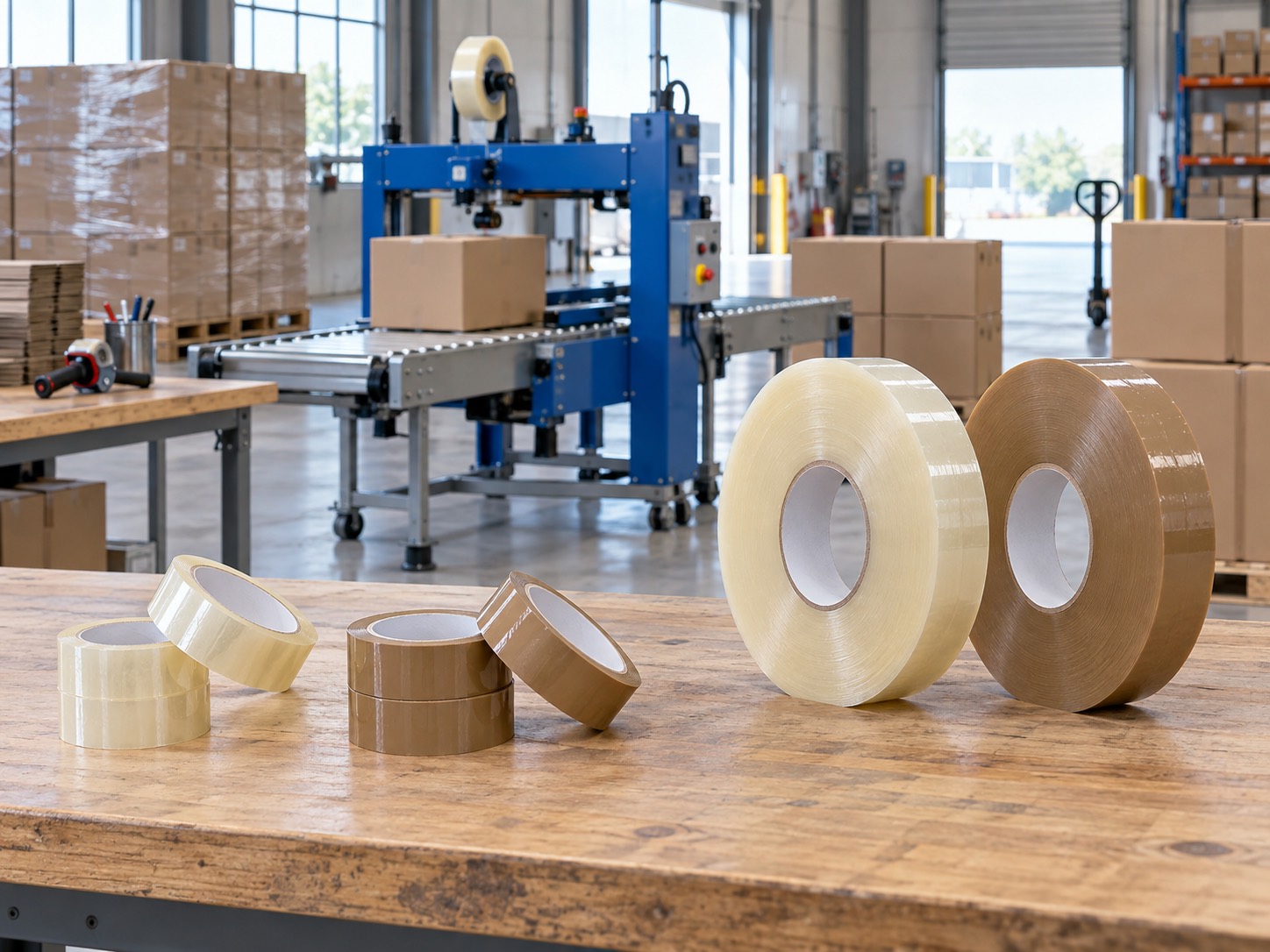
Line performance is not measured by speed alone. Carton variation, tape feed, flap closure and cutter condition affect both quality and stoppages.
Identify the product-specific risk
Check roll dimensions and tape-type limits in the machine manual. On the carton sizes most often used, verify even tape contact and clean cuts. Do not bypass operator training or safety guards.
Match inner protection, closure and pallet pattern
Sample cartons for secure tape ends and closed flaps before palletising. A later stretch-wrapping step cannot correct a defective carton closure.
What to check in a shipment trial
Record carton supplier, tape batch, roll-change frequency, line speed and opening defects. After a change, run a controlled trial and compare quality and stoppage data.
- Record product and carton dimensions, weight and lot details.
- Check carton closure, pallet arrangement and label access on a sample load.
- Compare damage and material use after shipment using the same criteria.
This is general packaging guidance. Confirm product-specific limits in current supplier documentation.
Review the pack for Packaging Tape Selection for Automatic Case Sealers
For “Packaging Tape Selection for Automatic Case Sealers,” share the product and carton dimensions, application method and transport route so the packaging steps can be reviewed against the actual workflow.
Frequently asked questions
How can tape-line downtime be reduced?
Record where interruptions occur, then check carton consistency, roll compatibility and machine maintenance instructions.
Which checks matter most before approving the pack?
For packaging tape selection for automatic case sealers, record the chosen materials, pack dimensions, route and handling conditions. Inspect the package at dispatch and receipt, then compare the results with the agreed acceptance criteria.