
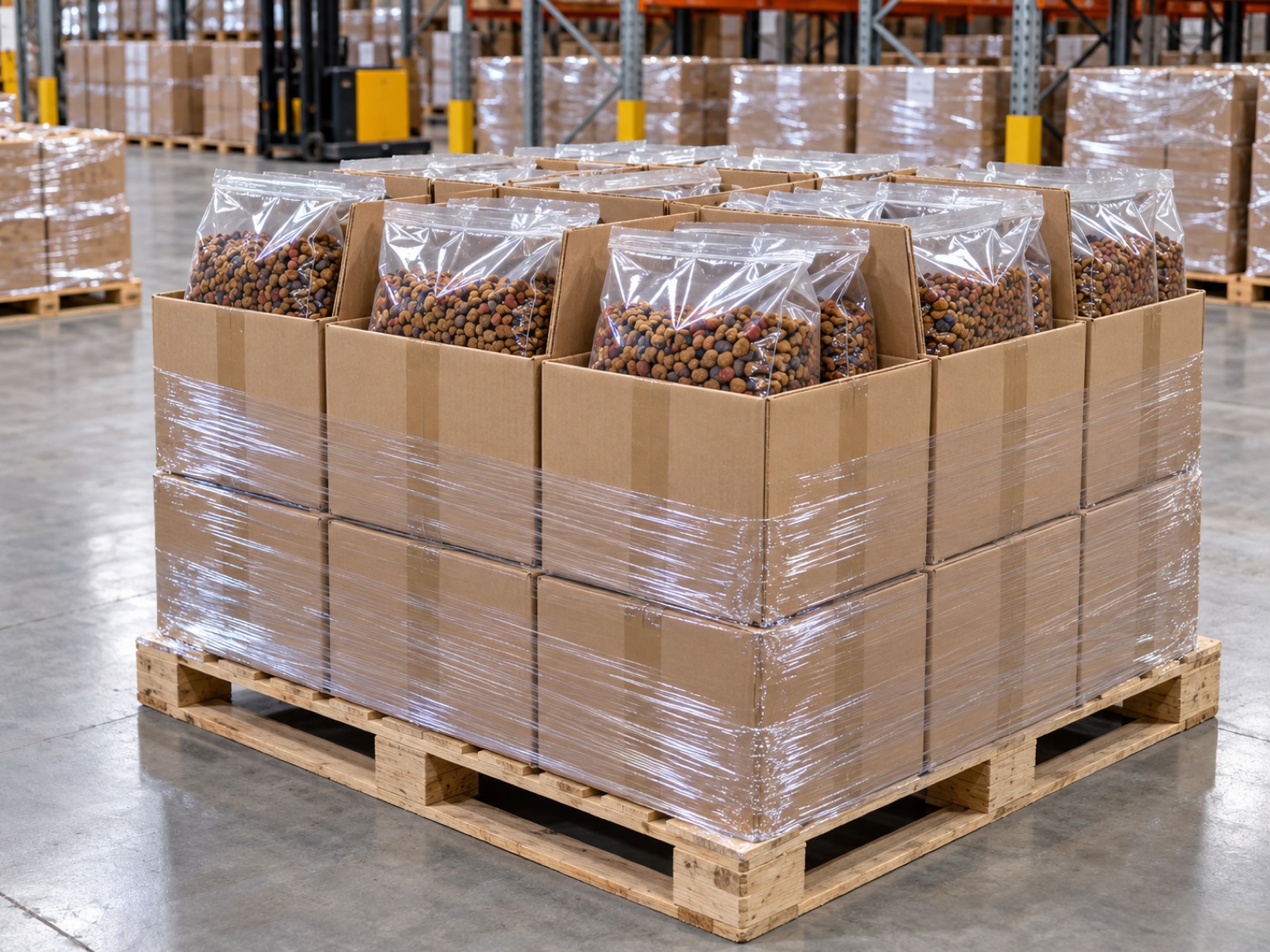
This article focuses on pet food and feed shipments. Check product-specific limits against current supplier documentation and a representative route trial.
Key risk in bagged pet food and feed products
Primary concern: primary-bag seal integrity and heavy case handling are separate from pallet containment. Identify the relevant product surfaces, contact points and route conditions before choosing outer protection.
Pack and application choices
Recommended approach: keep the bag's closure and product label protected, then use a carton pattern that resists compression and puncture. Keep the closure method and any product-level protection aligned with the actual carton, equipment and handling process.
Checks before dispatch
Practical check: inspect bag seals, case corners, lot/date visibility and pallet lean after handling. Record the pack configuration and inspect the shipment at dispatch and receipt before changing an approved method.
Request a technical assessment
For “Pet Food Packaging, Cartoning and Pallet Shipping,” share the product and carton dimensions, application method and transport route so the packaging steps can be reviewed against the actual workflow.
Frequently asked questions
Should pet-food bags be shipped loose on a pallet?
Use the product and distribution specification; case or secondary containment may help protect bags during multiple handling stages.
Which checks matter most before approving the pack?
For pet food packaging, cartoning and pallet shipping, record the chosen materials, pack dimensions, route and handling conditions. Inspect the package at dispatch and receipt, then compare the results with the agreed acceptance criteria.