
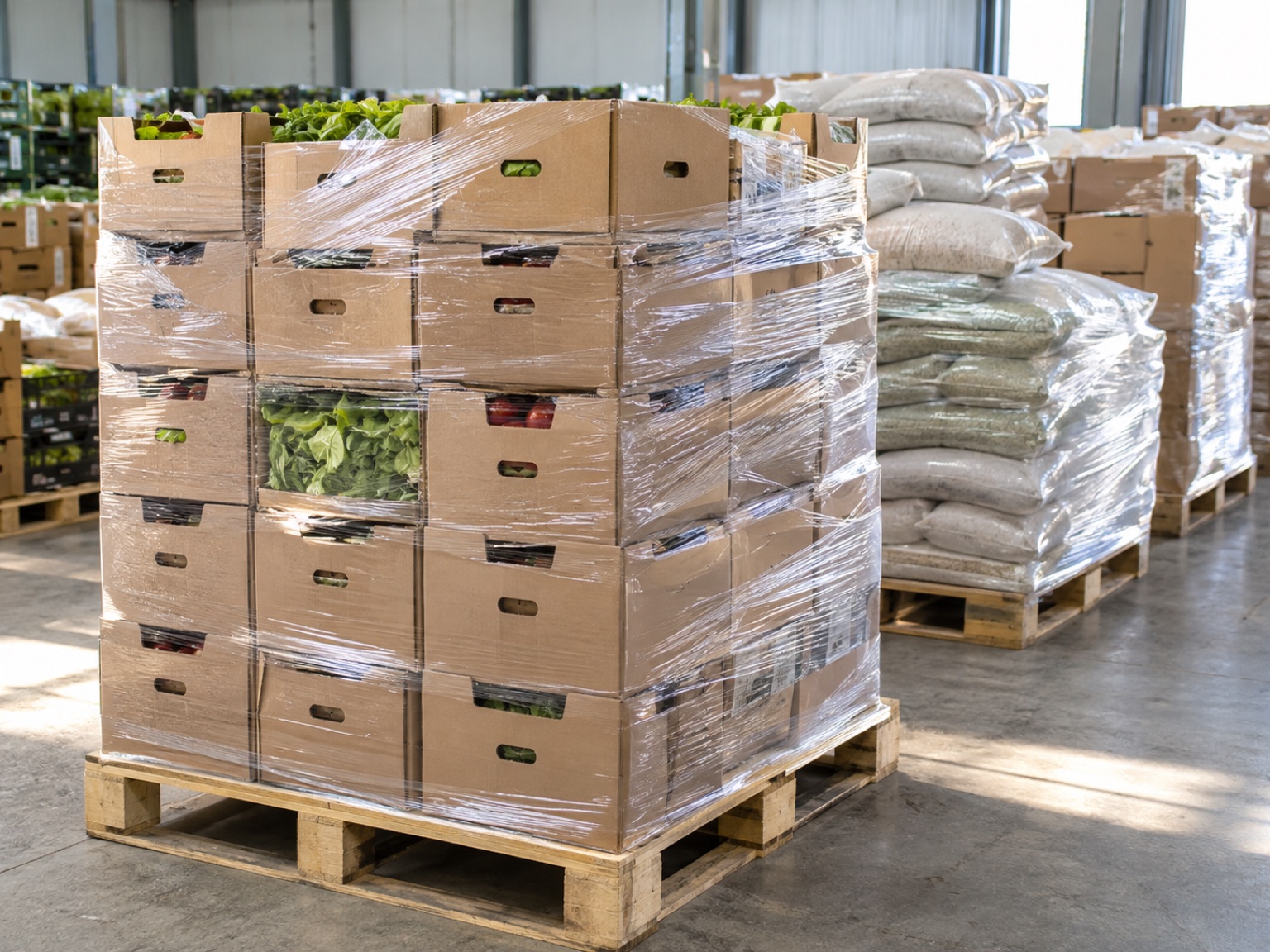
Fresh produce, seed and dry agricultural materials do not share the same packaging needs. Ventilation, moisture barrier, transit time and sensitivity to crushing all influence the choice.
Identify the product-specific risk
For fresh produce, assess crates or perforated cartons that preserve airflow. For seeds and dry goods, moisture protection and a secure bag closure may matter more. Do not fully wrap a pallet until product requirements are understood.
Match inner protection, closure and pallet pattern
Arrange crates or bags evenly on the pallet and check load and stack height to protect lower layers from crushing. If an outer cover is needed, trial its effect on condensation and air circulation.
What to check in a shipment trial
Monitor product temperature, storage duration, moisture, crushing and pallet stability. Reassess the pack when the commodity or route changes.
- Record product and carton dimensions, weight and lot details.
- Check carton closure, pallet arrangement and label access on a sample load.
- Compare damage and material use after shipment using the same criteria.
This is general packaging guidance. Confirm product-specific limits in current supplier documentation.
Review the pack for Agricultural Products Packaging and Shipping
For “Agricultural Products Packaging and Shipping,” share the product and carton dimensions, application method and transport route so the packaging steps can be reviewed against the actual workflow.
Frequently asked questions
Should agricultural cartons be fully wrapped?
Only when it remains compatible with the product's ventilation and temperature needs.
Which checks matter most before approving the pack?
For agricultural products packaging and shipping, record the chosen materials, pack dimensions, route and handling conditions. Inspect the package at dispatch and receipt, then compare the results with the agreed acceptance criteria.